
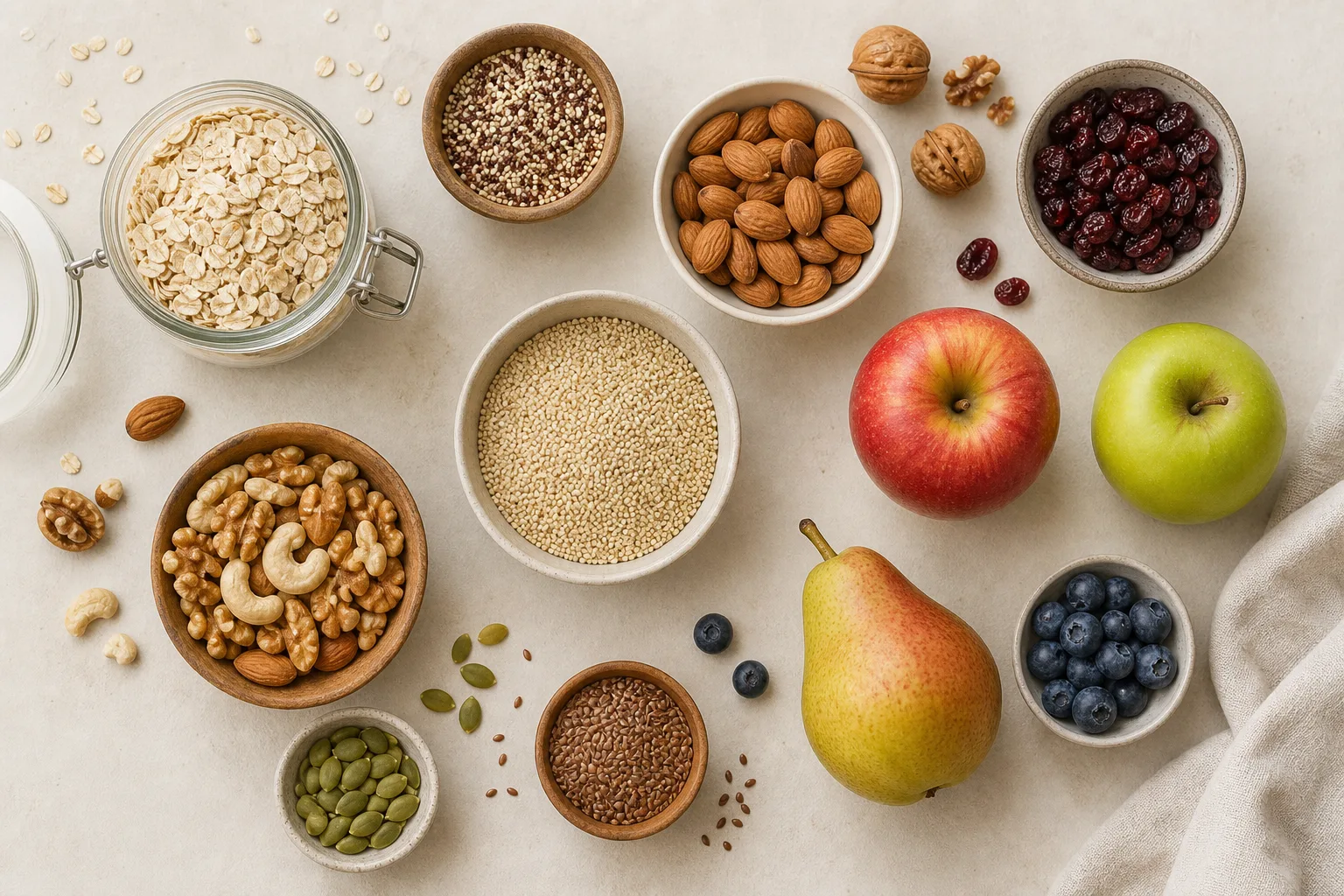
Walk down the aisles of almost any supermarket in Mauritius and the trolley fills itself: white rice, a fresh baguette, sweetened cereal, a carton of juice. These are comfortable habits, but they are also the foods most likely to send blood glucose on a sharp rise followed by an equally sharp slump. The encouraging news is that eating for steadier blood sugar rarely requires exotic imports. Most of the swaps below already sit on shelves around the island, from the big hypermarkets to the smaller health grocers.
A quick note before we begin: this is general information, not medical advice. If you live with diabetes, prediabetes or any other health condition, discuss dietary changes with your doctor or dietitian before making them.
Why fibre and intact grains blunt glucose spikes
When a grain is milled into fine white flour, its protective outer layers are stripped away and the starch inside is left fully exposed. Digestive enzymes break that starch down quickly, glucose enters the bloodstream in a rush, and the body has to respond hard. Many people recognise the pattern that follows: a burst of energy, then hunger and heaviness an hour or two later.
Intact or minimally processed grains behave differently. The bran and the physical structure of the grain act like packaging that enzymes must work through, so glucose is released gradually. Soluble fibre, the kind found in oats and legumes, is thought to form a gel in the gut that slows absorption further. Research suggests that meals built around intact grains, legumes and whole fruit tend to produce gentler glucose curves than meals built on refined flour and sugar, and that pairing carbohydrates with protein or fat softens the response as well.
You do not need to memorise glycemic index tables to benefit. A simpler rule covers most situations: the closer a carbohydrate is to its original form, the steadier it tends to behave.
Ten pantry swaps that do most of the work
1. White rice to quinoa, or half and half. Rice is central to eating in Mauritius, and nobody is asking you to abandon it. But replacing some or all of the white rice on the plate with quinoa, or blending white rice with brown or parboiled rice, adds fibre and protein that slow digestion. Cooking rice, cooling it overnight and reheating it is also commonly reported to increase resistant starch, which digests more slowly.
2. Regular pasta to legume pasta. Pasta made from red lentils or chickpeas carries noticeably more protein and fibre than white wheat pasta, and it holds a rougaille or a simple tomato sauce just as well. Cook it slightly al dente, because softer, more broken-down starch digests faster.
3. Sugary muesli or cornflakes to whole oat flakes. Many boxed cereals and mueslis are far sweeter than their packaging suggests. Plain jumbo or rolled oats, soaked overnight or briefly cooked, deliver the soluble fibre oats are known for without the added sugar. Flavour them with cinnamon, nuts and a little fresh fruit rather than honey or syrup.
4. Fruit juice to whole fruit. Juicing removes the fibre and keeps the sugar, so even freshly squeezed juice behaves much like a soft drink once it reaches the bloodstream. A whole mango, a small banana or a bowl of papaya arrives with its fibre intact and takes longer to eat.
5. White baguette to dense wholegrain or true sourdough. The daily pain maison is beloved, but it is refined flour. A dense, seeded wholegrain loaf, or a genuinely long-fermented sourdough, is generally reported to produce a gentler glucose response. Read the label carefully, since brown bread is sometimes simply coloured white bread.
6. Flavoured yoghurt to plain yoghurt with fruit. Flavoured pots often contain several teaspoons of added sugar. Plain or Greek-style yoghurt topped with chopped fruit and a spoon of seeds gives you protein and fat that steady the whole meal.
7. Refined flour rotis to atta or besan. Farata and roti made from white flour digest quickly. Wholemeal atta keeps the bran in the flour, and besan, the chickpea flour already familiar from Mauritian kitchens, is naturally higher in protein and fibre. Legume-based flatbreads and snacks are a swap that local food culture solved generations ago.
8. Jam and chocolate spreads to nut butters. A spoonful of peanut or almond butter with no added sugar turns a slice of toast from a fast-release carbohydrate into a mixed bite of fat, protein and carbohydrate.
9. Chips and sweet biscuits to nuts, seeds and roasted chickpeas. Snacking is where refined starch sneaks in every day. Roasted gram, a handful of almonds or a mix of pumpkin and sunflower seeds keeps you satisfied without the spike and crash.
10. Sweetened tea and fizzy drinks to unsweetened versions. Liquid sugar is absorbed fastest of all, because there is nothing to slow it down. Vanilla tea without sugar, or water infused with lime and mint, is an adjustment of a week or two for most palates, and it removes one of the most frequent daily glucose spikes.
Stocking a low glycemic pantry locally
Everything above can be found in Mauritius, though quality varies widely between brands. Lentils, dholl, red beans and gros pois are already staples of the national kitchen, and legumes are among the most glucose-friendly foods you can eat. The traditional plate of rice, dholl, greens and a protein needs only a modest rebalance, a little less rice and a little more of everything else, to become genuinely blood sugar friendly.
For the newer items, such as legume pasta, whole oat flakes and unsweetened nut butters, it pays to buy from retailers who curate for ingredients rather than shelf life. Naturespan, the new certified organic grocery destination in Mauritius, is one option worth knowing: its food truck is already on the road, and its stores open in Grand Baie and Tamarin from 1 September 2026. Its certified organic savoury pantry range covers many of the staples in this article, from wholegrain carbohydrates to legumes and unsweetened basics.
Wherever you shop, the same three checks apply. Is the grain intact or minimally milled? Is sugar hiding near the top of the ingredient list? And is there enough fibre, protein or fat in the product to slow things down?
Planning a stable glucose week
Swaps stick when they are planned rather than improvised at six in the evening. A simple weekly rhythm helps:
- Batch cook a pot of lentils or beans on Sunday to anchor two or three meals
- Fix breakfast for the week, for example overnight oats, so every day starts steady
- Pair every carbohydrate with a protein or fat, rice with fish and greens rather than rice alone
- Keep one shelf of steady snacks, nuts, seeds and roasted chickpeas, so the biscuit tin loses by default
If you would rather not build all of this from scratch, a free meal planner built around whole ingredients lets you sketch out a week of steady meals and turn it into a shopping list in a few minutes. The point is not perfection. It is removing decisions from the moment of the day when willpower is weakest.
Small swaps, compounding returns
No single pantry swap transforms metabolic health on its own, and food is only one part of the picture alongside movement, sleep and stress. But the pantry is the easiest lever to pull, because you make the decision once at the shop instead of thirty times a week at the table. Start with the two or three swaps that feel effortless, let them become normal, and add the next one when you are ready. Steady blood sugar is built exactly that way, one quiet shelf at a time.
Steady blood sugar is central to a longer, healthier life. Explore the wider Healthspan health ecosystem.