Eating for steady blood sugar: a practical guide
13 June 2026 · By Glucose.mu · Updated 17 June 2026
Food is your most direct lever
Of all the things that influence blood sugar, food is the one you control most directly, several times a day. The goal is not to eliminate carbohydrates or follow a rigid diet. It is to eat in a way that produces gentler, steadier rises in blood sugar instead of sharp spikes and crashes. This is achievable with everyday Mauritian foods and a few simple habits.
Not all carbohydrates behave the same
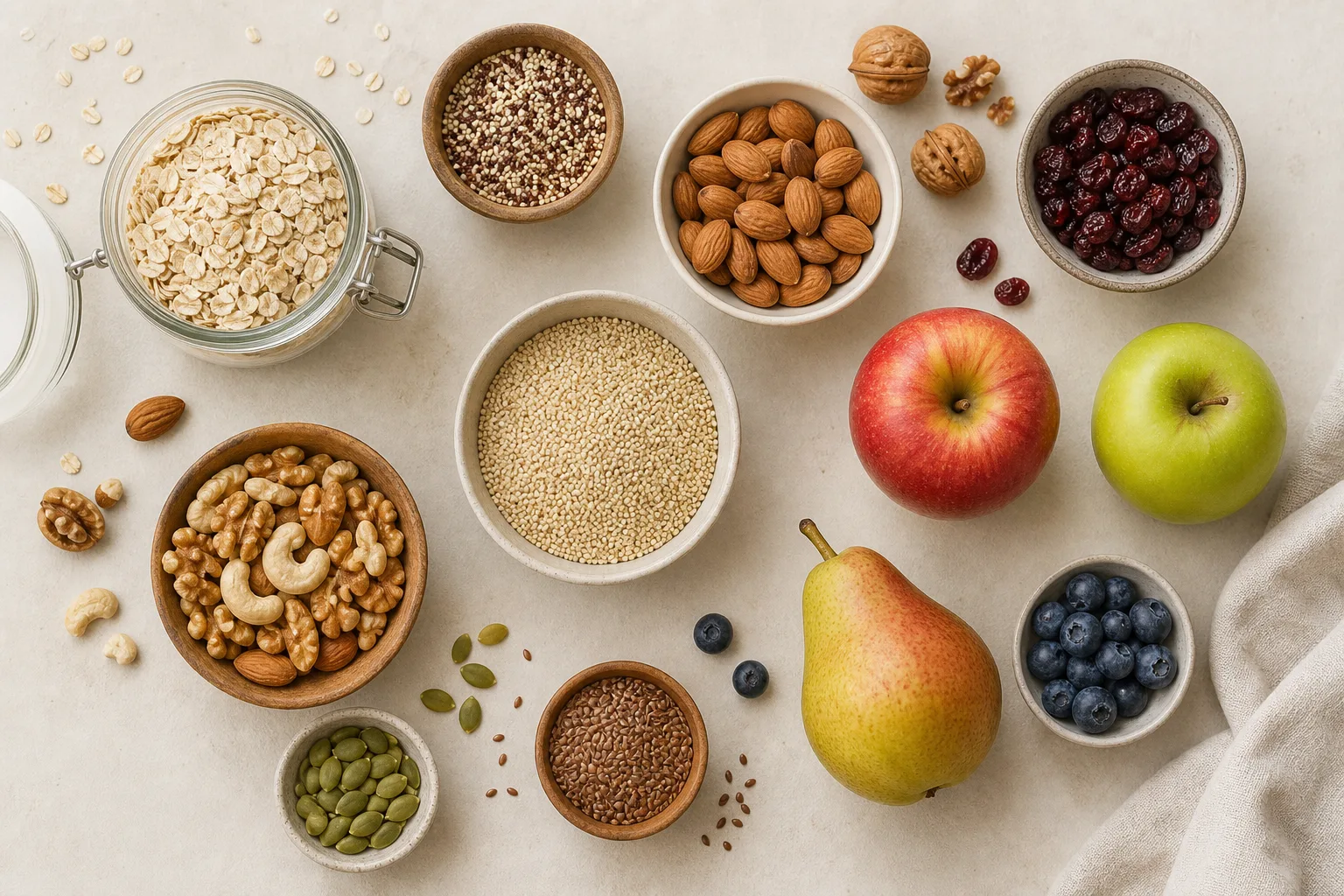
Carbohydrates raise blood sugar more than protein or fat, but they are not all equal. Refined carbohydrates, such as white rice, white bread, many pastries and sugary drinks, are digested quickly and send glucose up fast. Less refined choices, such as whole grains, beans, lentils, vegetables and whole fruit, are digested more slowly because they carry fibre.
Fibre is the quiet hero here. It slows digestion, blunts the blood sugar rise and helps you feel full. Dhal, beans, brown rice, oats, vegetables and whole fruit are all rich in it. You do not have to give up rice or roti, but pairing them with fibre, protein and vegetables changes how your body responds.
Whole fruit versus juice
Whole fruit contains fibre and is a good choice in sensible portions. Fruit juice and sweet drinks, by contrast, deliver concentrated sugar with little fibre and can spike blood sugar quickly. Choosing whole fruit and water over juice and soft drinks is one of the highest value swaps you can make.
Build a balanced plate
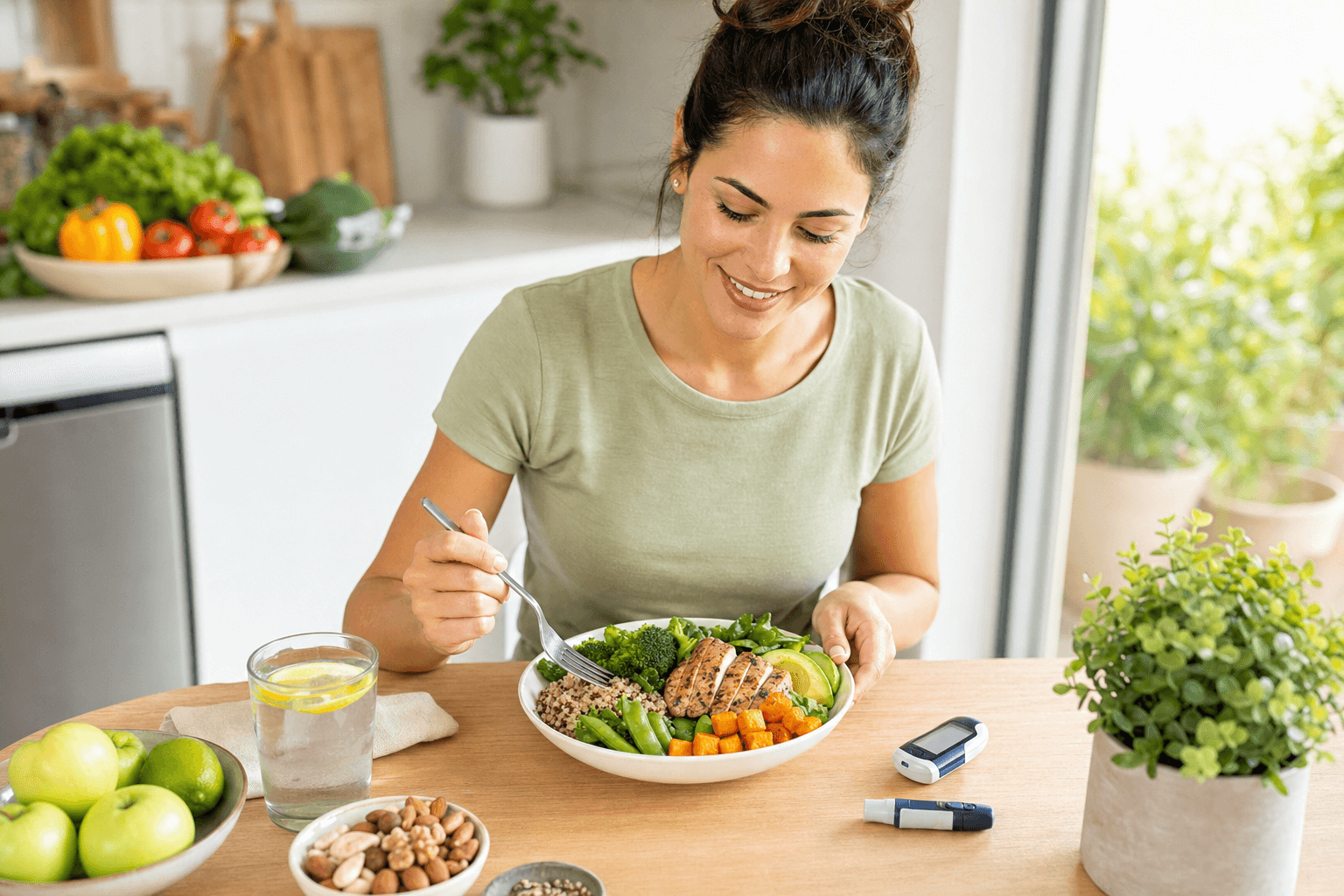
A simple, flexible plate model helps without counting anything. Aim to fill about half your plate with non-starchy vegetables, a quarter with protein such as fish, chicken, eggs, beans or lentils, and a quarter with a smart carbohydrate such as brown rice, whole grains or starchy vegetables. Add a little healthy fat from sources like nuts, seeds or a small amount of oil.
This balance naturally slows the blood sugar rise because the protein, fat and fibre all moderate how quickly the carbohydrate is absorbed. It also tends to be more satisfying, which helps reduce later cravings.
The order you eat in can help
Research suggests that eating vegetables and protein before the starchier part of a meal can lead to a smaller blood sugar rise than eating the starch first. In practice, starting with your salad or vegetables and your fish or dhal, then moving to the rice, is an easy habit that costs nothing and may help smooth the curve.
Easy, realistic swaps
Small changes add up. Consider swapping white rice for brown rice or mixing the two, choosing whole fruit instead of juice, drinking water or unsweetened tea instead of soft drinks, and adding extra vegetables or dhal to bulk out a meal. Snacking on nuts or yoghurt rather than biscuits keeps blood sugar steadier between meals.
None of these are about denial. They are about tilting your usual choices in a steadier direction most of the time, while still enjoying the foods and occasions that matter to you.
Watch the drinks and the extras
It is easy to focus on meals and forget what you drink. Sugary soft drinks, sweetened juices, and very sweet tea or coffee can quietly add a large amount of fast sugar. Cutting back here often has an outsized effect. The same goes for added sugar in snacks and desserts, which are best kept as occasional treats rather than daily habits.
Consistency beats perfection
You do not need a flawless diet. What matters most is the pattern you follow most days. Regular meals, plenty of vegetables and fibre, sensible portions of smart carbohydrates, and water as your main drink will take you a long way. Skipping meals and then overeating later tends to create bigger swings, so steady, regular eating usually serves blood sugar better.
When to talk to your doctor or a dietitian
This is general education, not a personalised meal plan. If you have diabetes, are pregnant, take medicines that affect blood sugar, or have other health conditions, your needs may differ. A doctor or registered dietitian can tailor advice to you, including portion sizes and timing. For most people, though, building meals around vegetables, fibre, protein and smarter carbohydrates is a safe, practical foundation for steadier blood sugar and better energy.
Steady blood sugar is central to a longer, healthier life. Explore the wider Healthspan health ecosystem.